The Surakana bookshelf

Fairy-tale collection

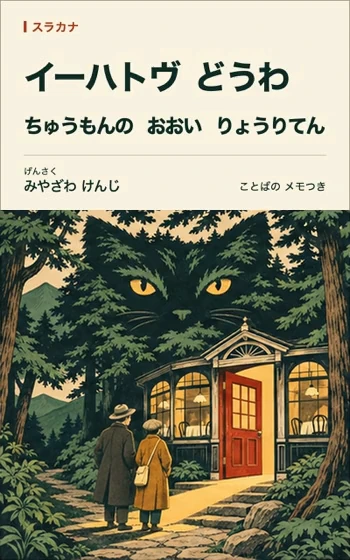
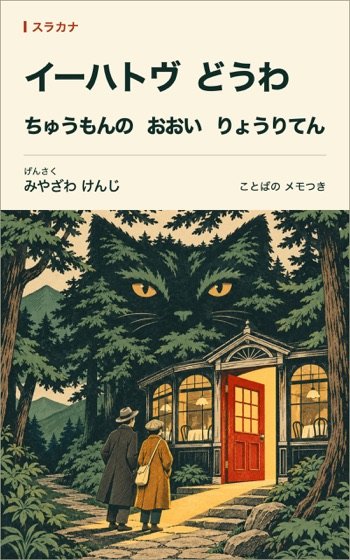
The Restaurant of Many Orders

Two travelers lose their way in the mountains and come upon a peculiar restaurant. Their story is one of the nine tales in Miyazawa’s Ihatov collection.

Planned price ¥890 (tax included)

From the book

The Restaurant of Many Orders

Two young gentlemen, dressed from head to toe like British soldiers, carried gleaming guns over their shoulders. With two dogs as white as polar bears at their heels, they walked deep into the mountains, leaves rustling underfoot, talking as they went.

From the Surakana reading guide

Before you begin

Miyazawa opens the book with a few words of his own. Then come the nine tales. After the last, you’ll find a piece he wrote to introduce the collection to readers.

When the same words turn up again, try reading them aloud. Do the sounds or pauses change? This edition keeps the animals’ voices and the old-fashioned turns of phrase as close as possible to the original.
Short story

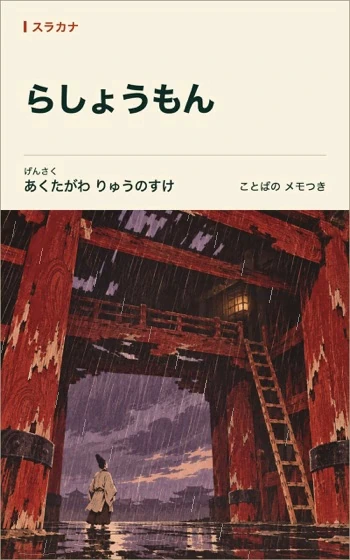
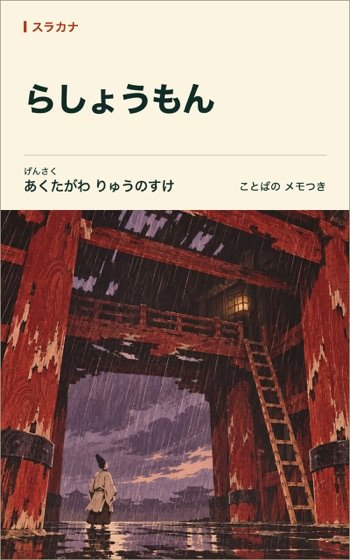
Rashōmon

A man shelters from the rain beneath a great gate in Kyoto. Someone seems to be up above.

Planned price ¥200 (tax included)

From the book

Rashōmon

It was dusk. A servant stood beneath the Rashōmon gate, waiting for the rain to let up.

There was no one else under the broad gate. A lone cricket clung to a great round pillar, its vermilion paint peeling away in patches.

From the Surakana reading guide

Words and places

Genin (servant)

A genin works in someone else’s service. When the story begins, the man has just lost his position. The rain is only one reason he stands beneath the gate, unable to decide what to do.

Hinoki-hada-iro (cypress-bark brown)

This reddish brown takes its name from the bark of a Japanese cypress. In the gloom under the gate, a kimono and a pimple come into view. The scene narrows from a whole landscape to one man’s face.

Short story

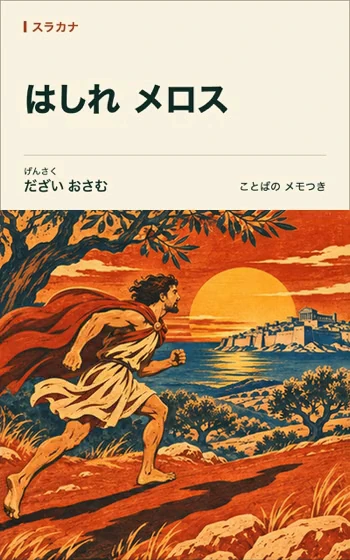
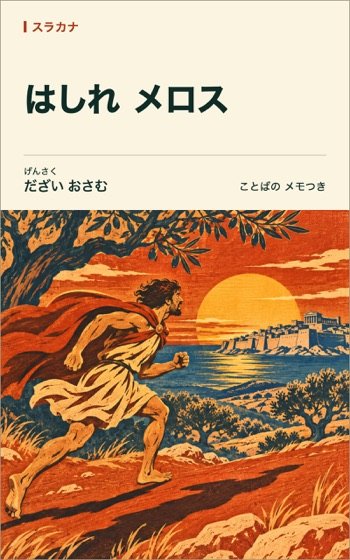
Run, Melos!

Melos leaves the city with a friend waiting behind. Can he keep his promise to return before the sun goes down?

Planned price ¥390 (tax included)

From the Surakana reading guide

Words and time

Migawari (a person who takes another’s place)

The friend waiting for Melos has agreed to stand in for him. Far more than a meeting between friends depends on his return. That promise carries Melos through the journey back to town.

Chikuba no tomo (a childhood friend)

Chikuba is a plaything made of bamboo. The expression describes friends who have known each other since childhood. Melos and his friend haven’t met in a long time. Reread their meeting before the king. How much do they have to explain to one another?

Military classics

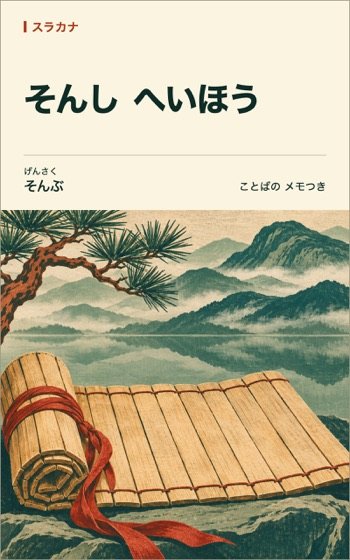
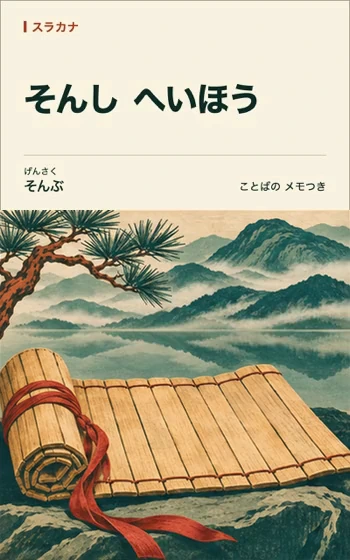
The Art of War

An ancient Chinese work read in Japanese word order. Thirteen chapters unfold through a succession of short sayings.

Planned price ¥590 (tax included)

From the Surakana reading guide

Reading classical Chinese in Japanese

This edition follows a reading printed in 1935. It uses kundoku, a way of reading a classical Chinese text by arranging its words in Japanese order.

How the language differs from modern Japanese

Nari states that something is so, much like the modern desu or de aru. Iwaku signals that someone’s words are about to be quoted.

Novel

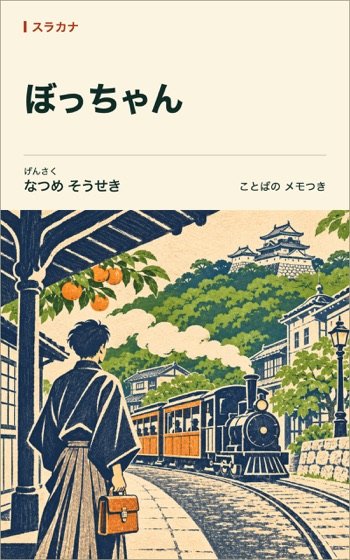
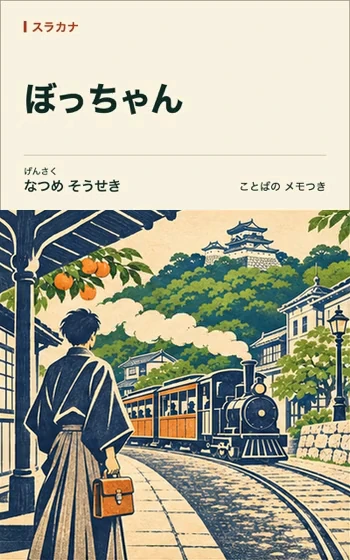
Botchan

A young teacher from Tokyo starts work at a school on Shikoku. This is Botchan’s story, told by a man who says whatever comes into his head.

Planned price ¥790 (tax included)

From the book

Chapter One

I inherited a reckless streak from my parents, and it’s been getting me into trouble since I was a boy. Once, in primary school, I jumped from the second floor of the schoolhouse and could barely stand up for a week. You might wonder what possessed me to do a thing like that.

From the Surakana reading guide

What people call each other

Botchan

An affectionate way to address a boy in a household. Kiyo still calls the narrator this when he is grown. Compare it with the nicknames he gives the people at school. How does each speaker feel about the person they’re naming?

Yamaarashi (porcupine)

An animal with spiny quills gives one teacher his nickname. Compare the first impression behind it with the relationship between the two men near the end of the book.

Fable collection

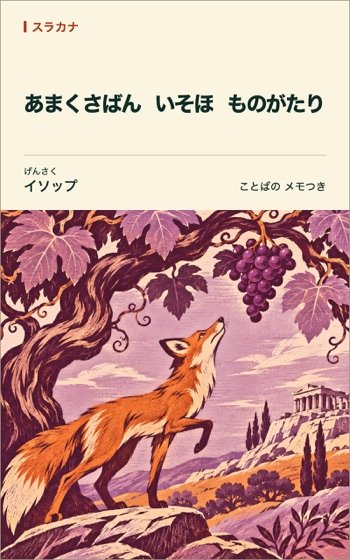
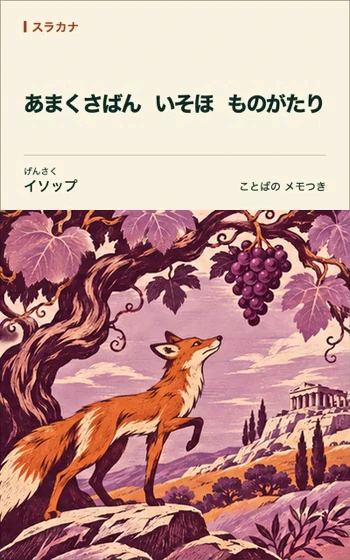
Aesop’s Fables, the Amakusa Edition

Short tales of wolves, sheep, dogs, and other animals. Read the Aesop stories once printed in Amakusa, now set in kana.

Planned price ¥650 (tax included)

From the Surakana reading guide

A book made in Amakusa

This book draws on an early Japanese translation of Aesop printed in Amakusa. Its printers used the Roman alphabet to record how the Japanese words sounded. In this edition you can read those same words in kana.

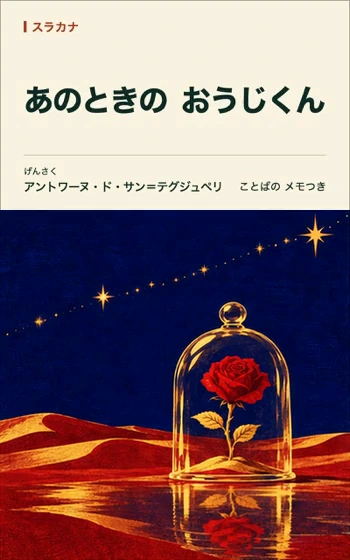
Tale

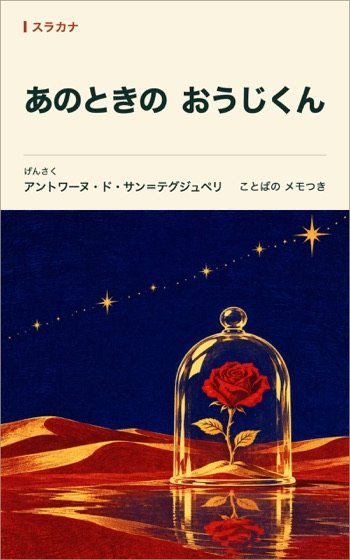
The Little Prince

A pilot who has landed in the desert meets a prince from a tiny planet. The prince tells him about the rose he left behind.

Planned price ¥390 (tax included)

From the Surakana reading guide

Words and pictures

Shōwakusei (asteroid)

An asteroid is a small celestial body. The grown-ups in the book know the prince’s world by a number. The prince knows it as the place where he keeps his rose and his chair. The same world has different landmarks depending on who describes it.

Natsuku (to grow attached)

Meeting again and again can create a bond unlike any other. Compare what the prince says about his rose before and after he meets the fox.

Tale

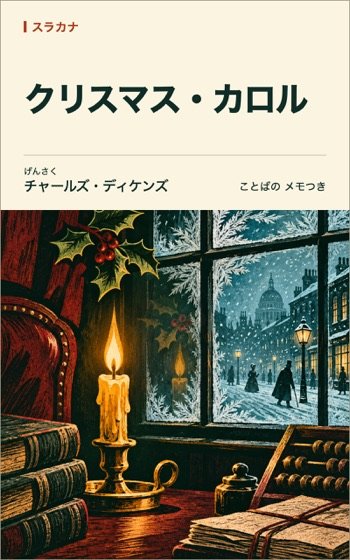
A Christmas Carol

On Christmas Eve, an old business partner appears in Scrooge’s room. An extraordinary night begins.

Planned price ¥490 (tax included)

From the Surakana reading guide

Words and ways of seeing

Seikōtansai (Christmas)

Today a Japanese reader usually sees Christmas written in katakana. This translation uses an older kanji expression for the holiday, and the kana edition preserves its sound. Each time it returns, notice who welcomes the day and who begrudges it.

Seirei (spirit)

In this story, invisible powers take on forms Scrooge can see. Compare the times each spirit shows him. Which of those scenes can Scrooge still change?

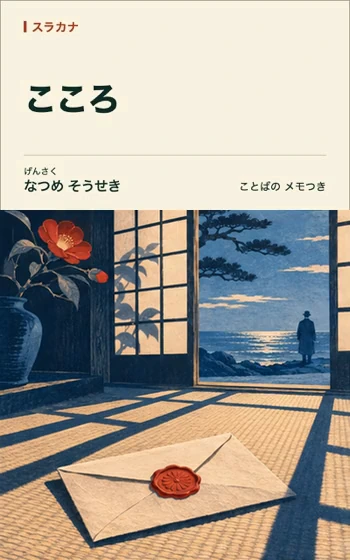
Novel

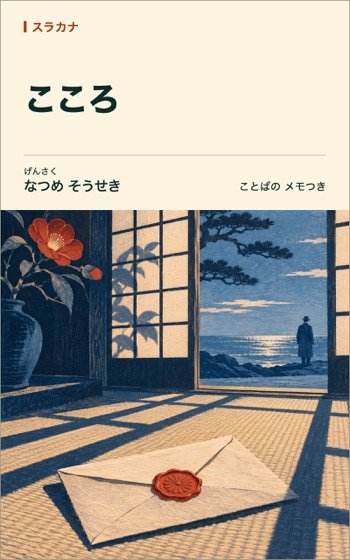
Kokoro

The narrator calls the man he meets by the sea “Sensei.” One day a long letter arrives from him.

Planned price ¥990 (tax included)

From the book

Part One · Sensei and I · Chapter One

I always called him Sensei. So here, too, I shall write only Sensei and keep his real name to myself. I do this less out of concern for what people might think than because it feels natural to me. Whenever I call him to mind, the first word that comes to my lips is “Sensei.”

From the Surakana reading guide

What people call each other

Sensei

The narrator calls the man only “Sensei” and opens by explaining why he leaves out his name. When Sensei writes his letter, he in turn refers to a friend by a single letter.

Isho (a letter left behind)

An isho is a letter written to be read after someone dies. In the final part, the voice shifts from someone observing Sensei to Sensei telling his own story.

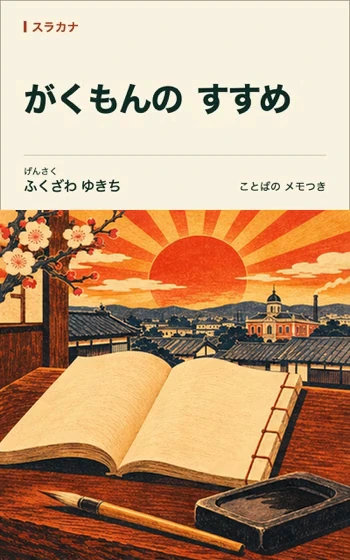
Essays on learning

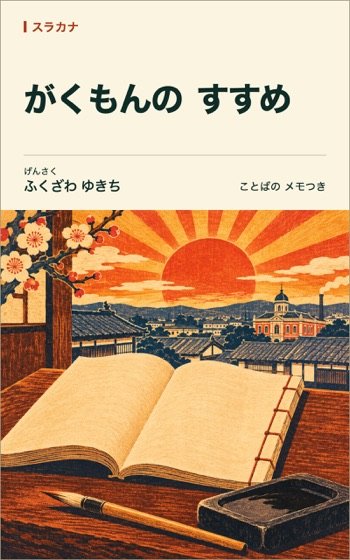
An Encouragement of Learning

What do we learn for? Fukuzawa begins with ordinary tasks such as writing a letter and weighing an object to explore how learning fits into daily life.

Planned price ¥890 (tax included)

From the book

The first installment

It is said that Heaven makes no person above another and no person beneath another. When Heaven brings people into the world, all therefore stand equal, with no distinction of high or low at birth. Each has a body and mind with which to draw on the things of heaven and earth for food, clothing, and shelter. Heaven’s purpose is that all may freely find their way through life in comfort, without standing in one another’s way.

From the Surakana reading guide

Words from an earlier time

Jitsugaku (practical learning)

Learning you can put to use at home or at work. The first installment mentions letters, the abacus, and weighing things. Pick one and find a similar task in your own life.

Dokuritsu (independence)

To think and act from your own standpoint without leaving everything to others. The third installment connects a person’s independence with a country’s. Read each idea on its own first, then look at how the two fit together.

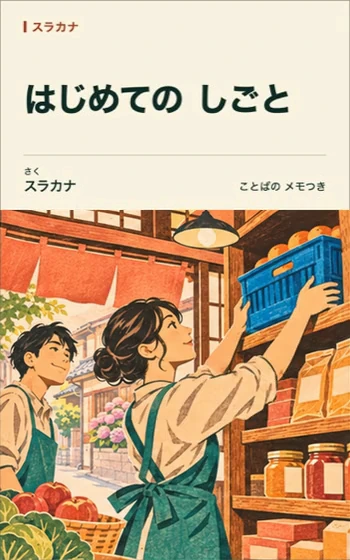
Workplace Japanese

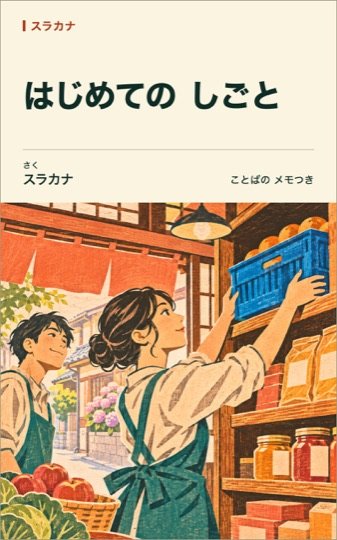
My First Shift

It’s Mai’s first shift in a shop. As she works, she practices asking where things go and checking what time to come in.

Planned price ¥490 (tax included)

From the book

The Blue Box

It’s nine in the morning. Outside a little shop, Mai ties her apron. Today is her first shift.

“Good morning. I’m looking forward to working with you.”

Tanaka, the shop manager, comes out from the back.

“Morning, Mai. Could you put this blue box on the shelf over there?”

There are two shelves over there. Which one? Mai gathers her courage and asks.

“Excuse me. Could you say that again, a little more slowly?”

Tanaka points toward the window. Mai points to the same shelf.

“The shelf by the window?”

“Yes, that’s the one.”

As Mai sets the box down, the morning light comes in through the window. It’s time to open the shop.

Read the English sample (PDF, 4 pages)

Children’s stories

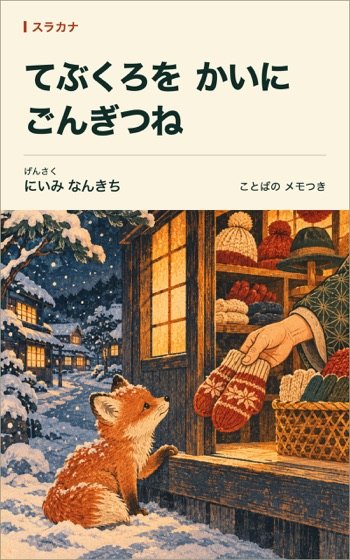
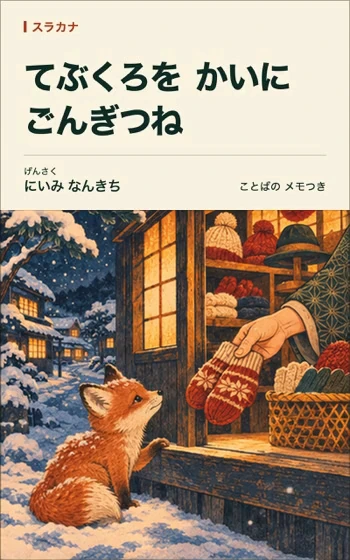
Buying Mittens and Gon the Fox

A little fox goes to town to buy mittens. Another fox, Gon, lives near a village. Two tales, each with a fox at its heart.

Planned price ¥590 (tax included)

From the Surakana reading guide

Words in Buying Mittens

Mawata and furoshiki

Mawata is soft silk wadding made from silkworm cocoons. A furoshiki is a cloth used to wrap and carry things. The story likens the softness of snow to silk wadding and the shadow of night to a wrapping cloth. You can almost feel the forest with your hands.

Chin-chin in hiragana and katakana

When the little fox’s paws grow cold in the snow, chin-chin describes their sharp sting. When coins go chin-chin in the shop, you hear small hard things striking one another. The original writes the bodily sensation in hiragana and the ringing sound in katakana.

Short stories

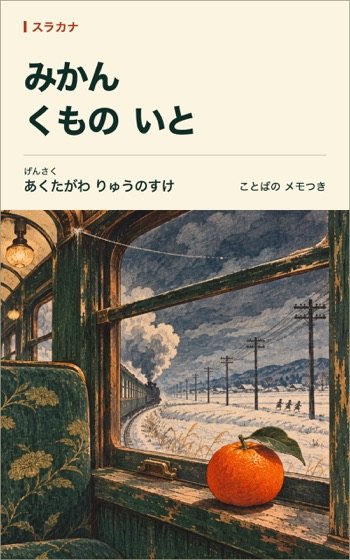
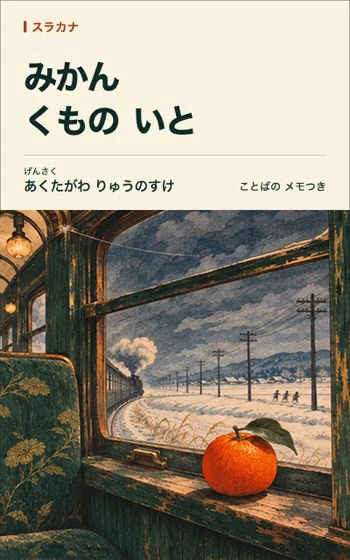
Mandarins and The Spider’s Thread

Mandarins fly from a train window. A single spider’s thread descends from above. Two stories by Akutagawa.

Planned price ¥390 (tax included)

From the book

Mandarins

It was a cloudy winter evening. I sat in the corner of a second-class carriage on the Tokyo-bound train from Yokosuka, waiting listlessly for the whistle to blow. The electric lights had been on for some time. Strangely enough, I had the whole carriage to myself.

From the Surakana reading guide

Reading Mandarins again

Second and third class

On this train, the ticket determines which carriage a passenger may use. The narrator sits in second class. The girl holds a red third-class ticket, and he assumes she doesn’t understand the difference. We hear his assumption. The girl never tells us in her own words what she was thinking then.

Going into service and seeing someone off

A hōkōsaki is the house or shop where someone goes to work in another person’s employ. The girl’s younger brothers stay off the train. They have come to the level crossing to watch it go by. The narrator watches what the girl does. Only then does he understand why she opened the window.

Folktale

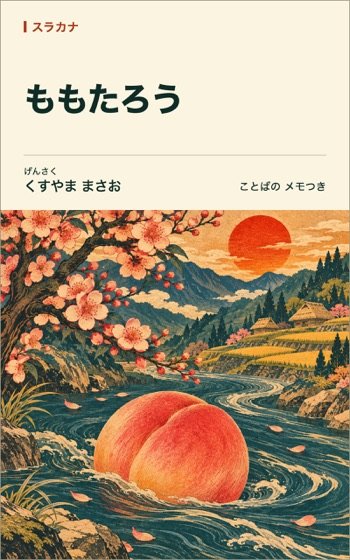
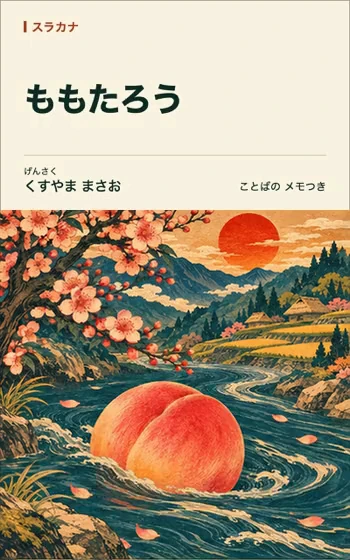
Momotarō, the Peach Boy

Born from a peach, Momotarō sets off for the ogres’ island with millet dumplings in his bag. Along the way he meets a dog, a monkey, and a pheasant.

Planned price ¥200 (tax included)

From the Surakana reading guide

Word notes

Shibakari (gathering brushwood)

This means gathering small branches in the mountains for firewood. The old man goes to the mountains, while the old woman goes to the river. That is how she comes to find the peach.

Kibidango (millet dumplings)

These dumplings are made with a grain called millet. In this story the food Momotarō carries for his journey also helps him make friends.

Children’s story

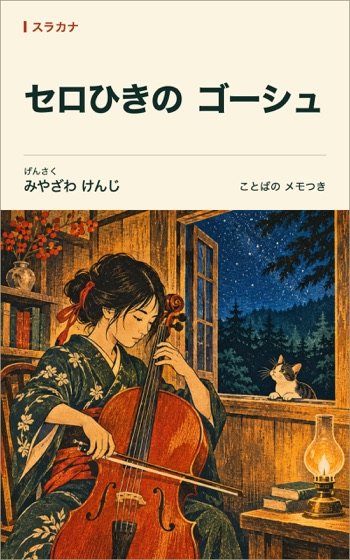
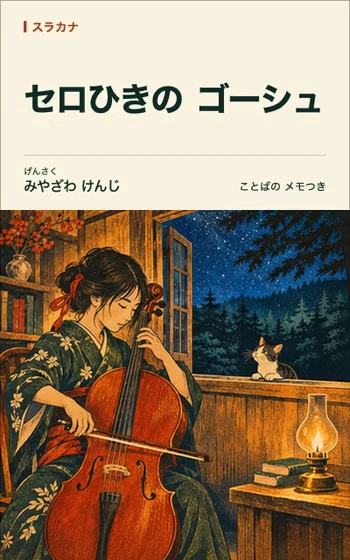
Gauche the Cellist

Gauche plays cello in an orchestra. As he practices alone at night, animals come to visit him, one after another.

Planned price ¥290 (tax included)

From the Surakana reading guide

Follow the sounds

The story moves from the sound of an orchestra to sounds heard in the middle of the night. At first the trumpet and violins play on, then fall silent together when the conductor claps. At Gauche’s hut, a noise at the door or on the roof tells us someone has arrived.

Read the repeated sounds aloud to hear where the phrases break. The cuckoo says the same call sounds different each time it sings it. At first Gauche hears no difference. Listen for what changes in his hearing after the two make music together.

Short fiction

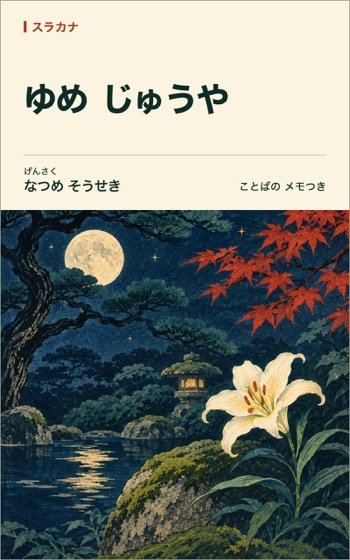
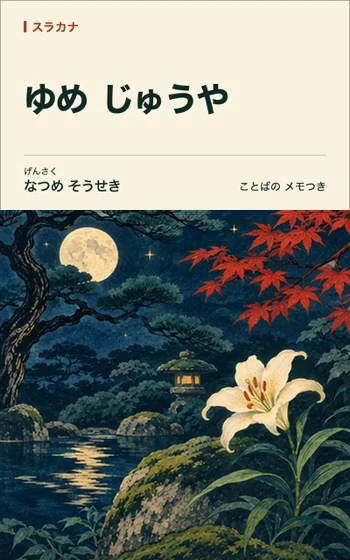
Ten Nights of Dreams

A woman asks someone to wait a hundred years. A man carves a figure out of wood. Each night opens onto a different dream.

Planned price ¥390 (tax included)

From the book

The First Night

I had this dream.

I sat at her pillow with my arms folded. Lying on her back, the woman said quietly, “I am going to die now.” Her long hair lay spread across the pillow, her softly oval face resting in the midst of it.

From the Surakana reading guide

Word notes

Hyakunen (a hundred years)

On the first night, a woman asks the dreamer to wait a hundred years. The words name a vast stretch of time. They also bind the two people in a promise to wait.

Mu (nothingness)

On the second night, a samurai wrestles with mu, a word for the absence of anything. He has learned the word. Now he wants to grasp its meaning for himself.

Mystery

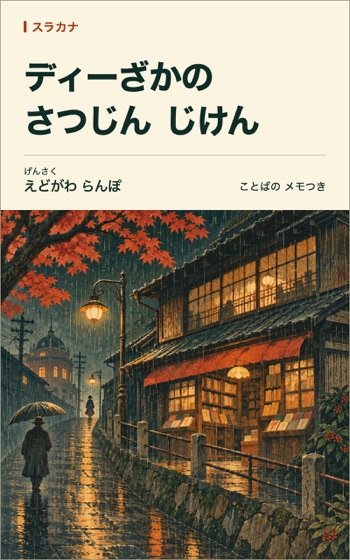
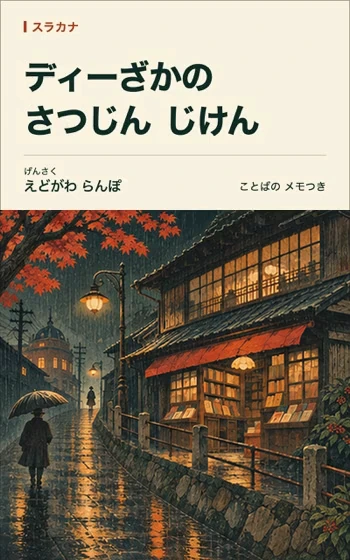
The Murder on D Hill

A crime takes place in a secondhand bookshop across from a café. Who saw what that night?

Planned price ¥290 (tax included)

From the Surakana reading guide

Separating facts from deductions

The story has two parts. The first sets out the facts, including what people say they saw and heard that night. The second looks at the same events from several angles and considers what might be deduced from them.

A character may say they saw something, yet their memory can differ from what happened. As you reread, keep track of who is speaking. Did that person see it firsthand, or work it out afterward?

Novel

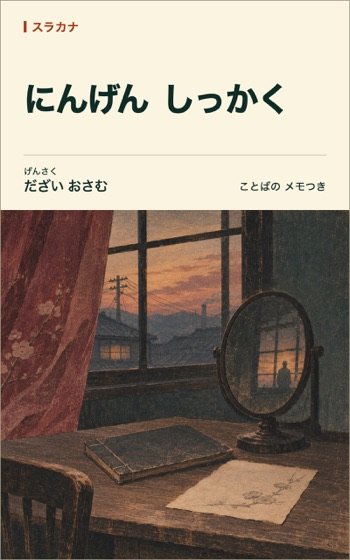
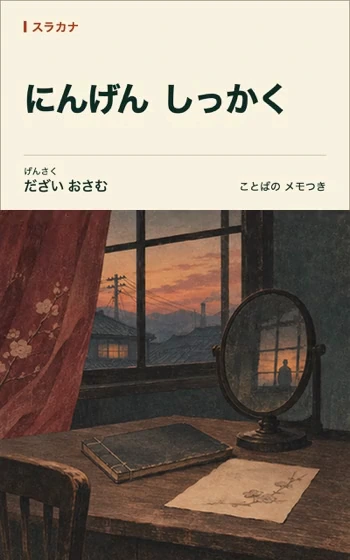
No Longer Human

Three photographs show the same man. First we hear from the person looking at the photographs. Then the man’s own notebooks begin.

Planned price ¥790 (tax included)

From the Surakana reading guide

Whose voice are we hearing?

The preface and the notebooks

The “I” in the preface tells us he has seen three photographs of a man. The speaker changes when the notebooks begin. Yōzō, the man in the photographs, repeatedly calls himself jibun, or “myself.” We hear one life described from outside and then told from within.

The epilogue and the notebooks

The narrator of the preface returns in the epilogue. He explains how a woman called Madam handed him three notebooks and the photographs. Read through to Madam’s last words for one more view of Yōzō.

Detective novel

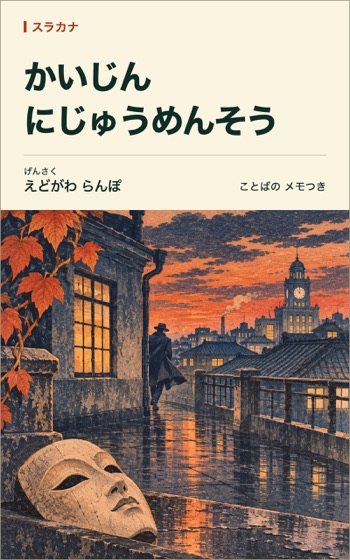
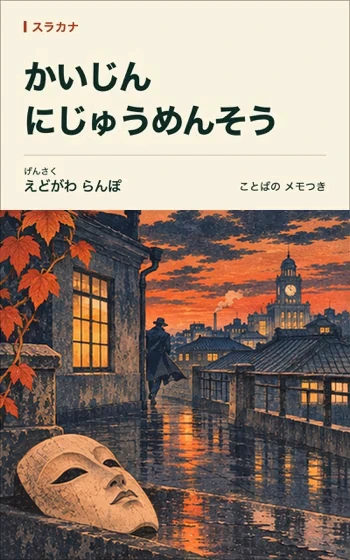
The Fiend with Twenty Faces

A master thief goes by the name of Twenty Faces. Detective Akechi and his young assistant Kobayashi set out to track him down.

Planned price ¥890 (tax included)

From the Surakana reading guide

Following the two detectives

In the preface, townspeople trade rumors about the mysterious criminal. We then meet the Hashiba family, including the eldest son, Sōichi, and his younger brother, Sōji. Their names sound alike, so keep track of which brother is which.
Yoshio Kobayashi is Kogorō Akechi’s apprentice. Akechi is away from Japan at the beginning. Notice the decisions Kobayashi makes on his own while Akechi is away. They’ll help you follow the scenes in which the two later work together.

Children’s story

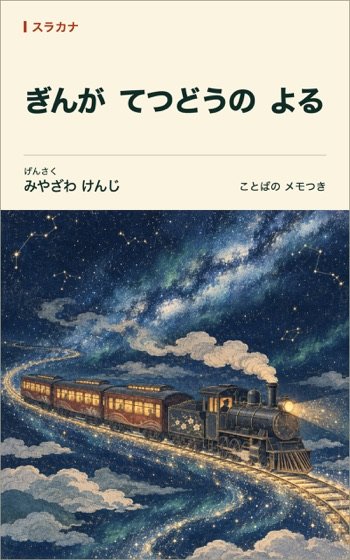
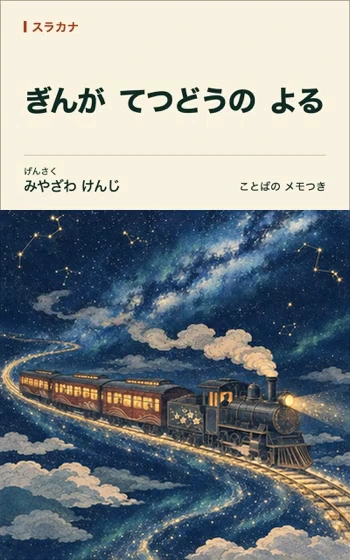
Night on the Galactic Railroad

Giovanni and Campanella board a train that runs through the starry sky. What will they see through its windows?

Planned price ¥590 (tax included)

From the Surakana reading guide

Word notes

Kappanjo (letterpress print shop)

Here, letters are set one by one to print books and newspapers. Giovanni works at the print shop after school, picking out the individual pieces of type.

Seiza hayami (star finder)

Set this chart to a date and time to find the stars visible then. Compare the star finder Giovanni sees in town with the diagram his teacher shows the class at the start of the story.

Novel

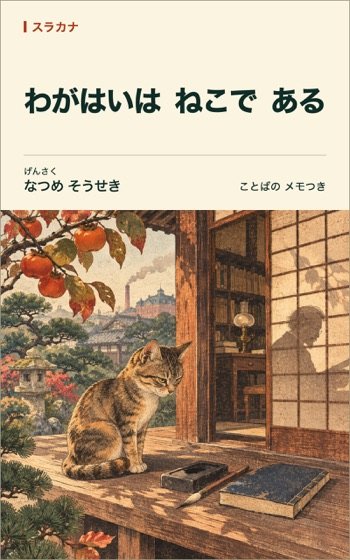
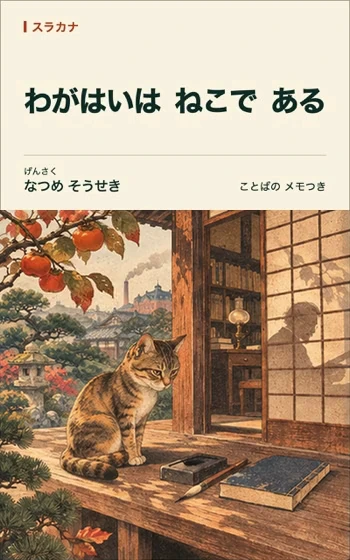
I Am a Cat

A nameless cat goes to live in a teacher’s house. Seen through the cat’s eyes, even ordinary human conversations take on a different air.

Planned price ¥1,190 (tax included)

From the book

Chapter One

I am a cat. As yet, I have no name.

Where I was born I haven’t the faintest idea. I remember only mewing away somewhere dim and damp. It was there that I first laid eyes on a human being.

From the Surakana reading guide

Seeing through a cat’s eyes

Wagahai and shujin

Wagahai is the word the cat uses for “I.” It sounds formal and rather grand. Yet this cat doesn’t even have a name. Those two facts sit side by side in the opening lines. Read them aloud and listen to the distance between the cat’s lofty manner and his humble circumstances.

The cat’s shujin, or master, is Kushami-sensei, a teacher of English. From inside Kushami’s house the cat watches what happens in the sitting room and the study. As the names shift among “master,” “teacher,” and “Kushami,” notice who is speaking. All three names refer to the same man.

Surakana Books

Japanese books written in hiragana and katakana.
Choose a cover to read a free preview in English.

21 books · Free previews

ja日本語